
For nearly two decades, a Palestinian-American filmmaker follows the trail of her father’s silence into the heart of a buried coastal village—uncovering a contested massacre, a family’s exile, and the quiet machinery of historical erasure.
SYNOPSIS
Tantura: Unearthed begins with a word Hala was not allowed to say: Baba. Her father, Marwan Al-Yahya, insisted she call him “Dad” instead. He stopped speaking Arabic. He rarely spoke of Palestine. A survivor of the 1948 massacre at Tantura, Marwan chose assimilation as a form of survival, burying the language, memories, and homeland that had been violently taken from him. He tried to give his children a “normal” life by hiding the life he had lost. But silence, once inherited, does not disappear. It waits.
That silence has a name: Tantura.
A Palestinian fishing village on the Mediterranean coast just south of Haifa, Tantura was attacked on May 22–23, 1948. Its residents were expelled, imprisoned, or killed. Survivors describe a massacre and a genocide that official narratives have long denied, minimized, or buried. Today, a beach resort and parking lot cover the ruins of the village—and the mass graves beneath.
Hala’s two-decade journey across the Palestinian diaspora gathers the living archive of Tantura before it is gone. Elderly survivors rebuild the village from memory: white sand beaches, citrus groves, weddings with racing horses and decorated camels, fishing boats, family homes, and a coastline where Palestinians and nearby Jewish communities once lived in proximity before 1948 shattered that world. Their testimonies reconstruct the night of the assault through firsthand memory: families huddled in her grandfather’s storehouse, gunfire in the dark, screams outside the walls, survivors herded onto the beach and stripped of their belongings, jewelry, watches, and identification papers. Fifteen-year-old Marwan is forced to stand naked before soldiers as they determine his age, then sent to a forced labor camp. He survives, carrying the story and the trauma in silence for decades.
To uncover what was deliberately paved over, Hala weaves survivor testimony with declassified archives, Teddy Katz’s suppressed research, and Forensic Architecture’s spatial analysis. She confronts the former commander of the operation, who denies a massacre yet acknowledges bodies buried beneath the parking lot. In the same encounter, he offers a conditional apology: “If we did anything wrong, please send my apology to your dad.”
Working with Forensic Architecture, Hala brings her collected testimonies into dialogue with aerial imagery, historical maps, and 3D modeling to identify probable mass grave sites hidden beneath the modern landscape. The investigation transforms memory into evidence and the resort into a crime scene.
Filmed over nearly two decades, Tantura: Unearthed blends intimate first-person interviews, illustrated memory, archival evidence, and forensic reconstruction. What begins as a daughter’s search for her father’s buried past becomes a reckoning with colonial displacement, inherited trauma, and the machinery of erasure. When Hala finally stands in the ruins of her ancestral home, a local fisherman greets her simply: “Welcome to your home.”
In a final confrontation with inheritance and denial, Hala meets Yael, the self-exiled daughter of one of the men who participated in the attack. Yael is horrified to learn she had unknowingly sunbathed for years above the mass graves. When she confronts her father, his response is chilling: “We did this for your benefit.”
Tantura: Unearthed transforms absence into evidence. It is a film about buried bodies, buried memory, and the inheritance of silence itself. From Tantura to Gaza, it reveals that 1948 is not past. It is a living continuum of displacement, denial, and survival—and a history that refuses to stay silent.
Director Statement
Filmed over nearly two decades, Tantura: Unearthed blends intimate observation, hand-drawn memory, archival evidence, and forensic reconstruction. The film transforms absence into witness—buried bodies, buried memory, and a history that refuses to stay silent.
I began with a single question: What happened in my family’s village of Tantura on the day we became refugees?
To answer it, I had to find the people who had lived it—survivors who had carried the village inside them for decades, most still living in refugee camps today. I spoke broken Arabic. I had no map to find them, no certainty they were still alive, no guarantee they would speak, or what they would say. I had only the question, and the silence where an answer should have been.
What unfolded was not merely an investigation. It became something I had not anticipated: an act of return. Every testimony gathered, every photograph unearthed, every name recovered from the margins of official archives was a refusal to let a village disappear simply because disappearing had been arranged for it. This film does not seek to reconstruct what was lost. It breaks the silence that was meant to bury it.
Tantura: Unearthed is a film about what erasure requires, and what memory resists. Every formal choice serves one purpose: to make visible what has been systematically made invisible. The camera does not observe history—it listens to it.
This is not a film that offers the comfort of resolution. It offers witness: the moral and emotional insistence that these lives, this village, this loss be seen and heard. The first-person structure is not a stylistic choice. It is the argument: history is not past. Its consequences are inherited. The children of the displaced carry their homeland in their bodies, whether or not they have ever seen the land.
The production of this film has spanned decades. That span is not a delay. It is the method. New witnesses continued to emerge. New evidence surfaced. When forensic teams digitally reconstructed the village and the attack, their work intersected with living memory, demanding integration. This timeline is not incidental. It is how the record is corrected—one voice, one recovered detail at a time, against the official narratives written to justify what was done.
We are making this film while erasure is being enacted, again, in full view. Tantura: Unearthed does not resolve that fact. It witnesses it. And it insists, as the survivors insisted, that return is not a fantasy. It is inevitable.
ABOUT FILMMAKER(S)
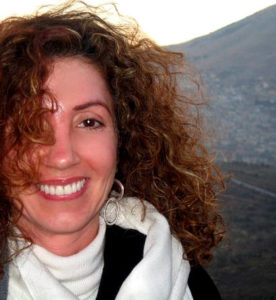 Director Hala Gabriel Yahya
Hala works as a freelance producer, production supervisor and production accountant for the major studios in Los Angeles. Her credits include series such as Girls, The Blacklist, and Longmire. In 2004, Hala, a California Institute of Arts graduate, majoring in Film and Television Production won a Silver Award at the International Houston Film Festival for her short documentary, The Love Project. One Night in Tantura is Hala’s feature documentary debut.
RELATED LINKS
PROMOTE THIS PROJECT
Put a donation widget on your site. Click here for code.
ABOUT YOUR DONATION
Women Make Movies (WMM), Inc. is a 501(c)(3) non-profit media arts organization registered with the New York Charities Bureau of New York State and accepts charitable donations on behalf of this project. Your donation will be spent by the filmmaker(s) toward the production and completion of this media project. No services or goods are provided by Women Make Movies, the filmmaker(s) or anyone else associated with this project in exchange for your charitable donation.
Your contributions are tax deductible to the fullest extent of the law, and a confirmation of your donation will be sent via email. WMM will send you an acknowledgement letter in the mail to the address listed for tax purposes.
