When a novel reveals her Jewish cattle-trading family didn’t leave Germany by choice but by coercion, Carole travels to her family’s town. There, she collaborates with high school students, uncovering in local archives how brutality takes hold, law by law, echoing patterns that are unfolding again in our own time.
SYNOPSIS
The film began with a profoundly personal discovery. In 2016, I came across a novel titled Something Remains, written by a German woman, set in the small town of Ellwangen in southern Germany—the very town near Stuttgart where my mother's Jewish family had lived and worked as cattle traders before the Holocaust. As I read, I was astonished to find the names of my own family woven into its pages: my great-great-grandparents, great-aunts, uncles, and cousins. Most of these people I had known later in life, after they had escaped Nazi Germany and rebuilt their lives across Argentina, Colombia, Switzerland, Australia, and the United States. Until that moment, I had never understood the full story of what had happened to them.
The novel itself grew from an extraordinary educational project. The author of the novel, who was a history teacher at Ellwangen's Gymnasium in 2000, asked her students a simple question: Who were the last Jewish students to attend their school? The students’ research uncovered the lives of two boys, Erwin and Erich Levi, my cousins, whose stories had all but disappeared from local memory. Inspired by the students' work, their teacher wrote the novel that ultimately led me back to my family's hometown.
Our documentary returns to the same school in 2026, where a new generation of students, guided by their history teacher, examines original municipal records from 1933 to 1938 in the town archives, just steps from their classroom.
As they work through ordinances, tax records, school files, and municipal correspondence, they uncover how ordinary bureaucratic decisions and incremental legal changes stripped Jews, political opponents, Roma, people with disabilities, and others of their civil rights. One record at a time, they see how these decisions led to the expulsion of Jewish families who had lived in Ellwangen for centuries alongside their Protestant and Catholic neighbors. Democracy did not disappear overnight. It was dismantled gradually through the actions of local officials, civil servants, teachers, and neighbors. Today, there are still no Jewish families living in Ellwangen.
And Then One Day… is an urgent exploration of how authoritarianism takes root, how communities come to accept the exclusion of their neighbors, and how democratic societies can unravel through legal mechanisms that appear ordinary at the time. By following the students, their teacher, and my own journey of discovery, the film asks a question of profound contemporary relevance: Can we recognize the warning signs before history repeats itself?
At a moment when democracies around the world are facing rising polarization, attacks on civil liberties, and the normalization of exclusionary rhetoric, this story could not be more timely. Rather than looking only backward, the film invites audiences to examine the present, and to consider the choices each of us makes in defending democratic values before they quietly disappear.
Director Statement
I never intended to make a film about my own family. What began as a chance discovery became an exploration of something much larger: how ordinary people and ordinary decisions can gradually reshape a community.
What draws me to this story is not only the past, but the process of discovery itself. By following a new generation of German students as they ask difficult questions, I wanted to create a film that invites curiosity rather than certainty. Their willingness to wrestle with uncomfortable truths gives me hope.
I am less interested in providing answers than in opening a dialogue. If this film succeeds, I hope audiences leave asking themselves: How do we recognize small shifts before they become something much larger? And what responsibility do each of us have when we see them unfolding?
ABOUT FILMMAKER(S)
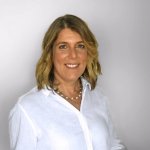 Director/Producer Carole Blueweiss
Carole directed, produced, and wrote Center of the Universe—a short piece about a controversial sculpture—and co-produced and co-wrote Behind the Picket Fence, a cinéma vérité feature exploring domestic violence through the voices of survivors for American public television. She also co-produced the award-winning documentary This Might Hurt, which investigates the mind-body connection and chronic pain. Carole is also a physical therapist, passionate photographer, and host of the podcast Wisdom Shared.
Judith Helfand is a Peabody Award–winning documentary filmmaker whose influential body of work includes A Healthy Baby Girl, Blue Vinyl, Everything’s Cool, Cooked: Survival by Zip Code, Love & Stuff (the 10-minute short and feature), and her forthcoming Good Mourning Ethel. Her films have premiered three times at Sundance and been nationally broadcast on PBS [3x on POV], HBO, and The Sundance Channel. In addition to her filmmaking, Helfand is a co-founder of Working Films and Chicken & Egg Films, through which she has helped shape the field of social-issue documentary and impact storytelling. She is a longtime educator, a nationally recognised Pitch Producer/Trainer/Moderator (Athena Film Festival, Pitch & Kvell, Doc-Pitch & Launch at Newmark J, School), and has been a guest professor at leading universities, including U.W. Madison’s Environmental School and Columbia J. School. She is a member of the Academy of Motion Picture Arts and Sciences Doc Branch.
RELATED LINKS
PROMOTE THIS PROJECT
Put a donation widget on your site. Click here for code.
ABOUT YOUR DONATION
Women Make Movies (WMM), Inc. is a 501(c)(3) non-profit media arts organization registered with the New York Charities Bureau of New York State and accepts charitable donations on behalf of this project. Your donation will be spent by the filmmaker(s) toward the production and completion of this media project. No services or goods are provided by Women Make Movies, the filmmaker(s) or anyone else associated with this project in exchange for your charitable donation.
Your contributions are tax deductible to the fullest extent of the law, and a confirmation of your donation will be sent via email. WMM will send you an acknowledgement letter in the mail to the address listed for tax purposes.
