
Roots of Resilience is a documentary feature about Northern temperate rainforests and the people determined to protect and restore them. The film profiles two communities linked by latitude – one racing to protect what remains, the other seeding renewal – of forests that sustain us all.
SYNOPSIS
Set against a backdrop of climate disruption and forest loss, ROOTS OF RESILIENCE weaves two stories infused with hope and urgency, in Northern landscapes linked by salmon and historically vast forests.
An urgent race to protect remaining old growth is underway along the Pacific Coast shared by Canada and the US. The world’s largest temperate rainforest is under threat, with stakes made higher by recent American elections. In a region known for indigenous communities with deep cultural connections to the forest, logging continues on both sides of the border. The Tongass National Forest in Alaska is in peril as a new administration proposes to re-open areas to logging and development.
On the same latitude across the globe, rugged moors of the Northern British Isles offer a foretaste of former rainforest, in a landscape transformed by millennia of human impact. Long ago these isles were blanketed by the Caledonian woods to the North. The people of these forests, fierce protectors in their time, inspired Romans to construct Hadrian’s Wall near the boundary between England and Scotland. Today, Scotland and neighboring Ireland are among the most deforested places on earth. Less than 2% of ancient forest remains, yet rewilders dream of forests long lost to early colonization, industry and conflict.
The fate of temperate rainforests impacts us all, given their vital role in sequestering carbon and fostering biodiversity. Together these stories speak of resilience, loss, and renewal. Can we build a more sustainable relationship to the forests that sustain us?
Director Statement
I have been telling stories about people and places of the Pacific Northwest for two decades, while living on the Olympic Peninsula, a lush world of waterways and mountains, known for its temperate rainforest. Yet the seeds for this film were planted in two places, close to home and on the other side of the world. I attended the international climate conference in Glasgow (COP26) where assembled nations made a new commitment to forests, a promise to “halt and reverse” global deforestation by 2030. Although my distant family heritage is in Scotland and Ireland, this was my first trip to these beautiful and windswept isles.
Closer to home, in the Pacific Northwest, I’ve had the privilege of working with many indigenous collaborators. During a recent film project, a former tribal chairman asked a thought-provoking question about the landscape of my ancestors. Our ensuing exchange planted the second seed for this film. I became curious about the lost Caledonian wood, in a landscape that shares both climate and latitude with the Pacific Northwest. At the same time, I wondered how this history shaped European settlers, particularly in the world I call home. Will a cycle of extreme deforestation be repeated, from one side of the globe to the other, or can we learn from examples of the past?
Supporter Statement
“Jessica’s previous film, Return of the River, demonstrated that nature could be restored to health in spite of human interference, and that gave me hope. The idea of protecting forests and rewilding forests to restore the health of the planet is both exciting and reassuring. I trust this story will come to life in Jessica’s capable and inspired hands.” - Cynthia (Founding Donor)
ABOUT FILMMAKER(S)
 Director: Jessica Plumb
Jessica Plumb is an award-winning filmmaker and writer known for exploring the relationship between people, and the land and waters that sustain us. She is the Producer and Co-Director of the feature documentary Return of the River, chronicling Elwha River restoration, a film recognized with multiple awards including “Best Storytelling” by the International Wildlife Film Festival, and “Best Writing” in science media. Collectively her films have appeared in over 50 film festivals and garnered 20 awards. Plumb’s video production company produces short films on environmental topics for clients including HHMI Tangled Bank Studios, National Geographic Learning, the Clean Energy Transition Institute, Original Pursuit Inc., and numerous non-profit institutions. Her recent work includes a trilogy of films addressing the shared extinction threat facing Southern Resident Killer Whales and Chinook salmon in the Salish Sea. Plumb’s writing on Elwha River restoration was published by the Best American Science & Media Writing 2022 and her work can be found in Orion Magazine and other publications. She holds a B.A. from Yale University, an interdisciplinary MFA from Goddard College, and is currently a Fellow of the Salish Sea Institute at Western Washington University. After stints in Boston and Beijing, Jessica made her home on the Olympic Peninsula, close to land and waters she loves. For more please see www.plumbproductions.com.
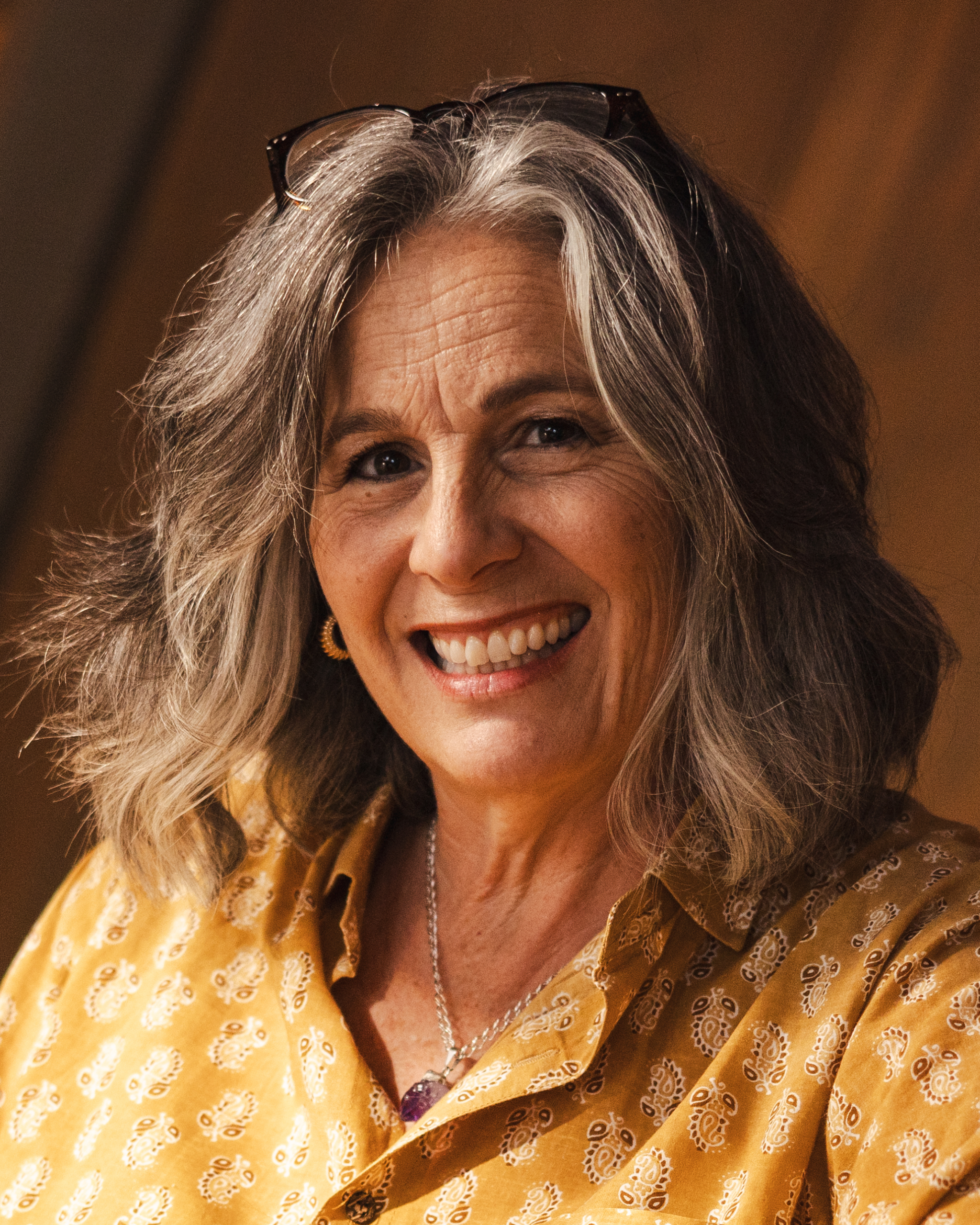 Executive Producer: Ann Wilkinson Ellis
Ann Wilkinson Ellis is a lifelong resident of the Pacific Northwest who grew up in the Salish waters surrounding Bainbridge Island. In 2000, Ann co-produced and co-wrote the award-winning independent feature film, Farewell to Harry. Ann’s a dramaturg and consultant for numerous film shorts, features and theatrical productions. This film resonates with Ann for its dedication to the restoration and defense of temperate rainforests and its relevance in highlighting our biophilic connection with nature.
Nicolai Crane is a documentary filmmaker, producer, cinematographer and editor. He has worked on many award-winning films ranging from Netflix to Sundance, including the Academy Award winning film, Mighty Times: The Children’s March. With over 20 years in the industry, he uses the ancient art of storytelling to change hearts and minds. Nico is director of photography for the Pacific Coast unit
Eilidh Munro is a BAFTA Scotland winning self-shooting documentary director who specializes in observational creative documentaries. Her films have been screened across the world in film festivals and broadcast, and have been used to influence policy and decision making both in the UK and internationally. Eilidh is one of two cinematographers for the Northern UK/Europe unit.
Rachel Ross is an adventure and environmental filmmaker, with a love for tying together human stories with our landscapes and wildlife. As a multi-skilled shooting producer-director, she thrives on narrative-lead documentary work, and commercial campaigns centred on stories with real meaning – focusing in on our connections with nature, landscapes and wildlife.
RELATED LINKS
PROMOTE THIS PROJECT
Put a donation widget on your site. Click here for code.
ABOUT YOUR DONATION
Women Make Movies (WMM), Inc. is a 501(c)(3) non-profit media arts organization registered with the New York Charities Bureau of New York State and accepts charitable donations on behalf of this project. Your donation will be spent by the filmmaker(s) toward the production and completion of this media project. No services or goods are provided by Women Make Movies, the filmmaker(s) or anyone else associated with this project in exchange for your charitable donation.
Your contributions are tax deductible to the fullest extent of the law, and a confirmation of your donation will be sent via email. WMM will send you an acknowledgement letter in the mail to the address listed for tax purposes.
