
When melting glaciers threaten to destroy his town, an Indigenous mountain guide in Peru files a landmark climate lawsuit against a European energy giant. Over a decade, Saúl navigates between Andean life and the international spotlight while teaching his daughter what it means to protect the mountains they call home.
SYNOPSIS
In the Peruvian Andes, Saúl Luciano Lliuya tends his fields, herds animals, and guides tourists to high peaks. His life and livelihood center around the mountains. All this is at risk as glaciers above his city melt, flowing into Lake Palcacocha. Experts fear the lake's dam will break, sending a catastrophic flood towards 100,000 people below.
But Saúl is not standing by. He files a precedent-setting lawsuit against one of Europe's largest energy companies. He travels to Germany, navigating press conferences, climate marches, and courtrooms. He is uneasy in the spotlight and grapples with the weight of his new role.
With the decade-long lawsuit as its backbone, the core of SENTINELS is the story of one family’s relationship to a landscape and lifestyle under threat. Parallel to her father’s journey, Saúl’s daughter Gleyssi grows from a playful four-year-old oblivious to the changes overtaking her mountains, to a schoolchild participating in flood evacuation drills, to a teenager who travels with her father to the UN Climate Conference in Brazil.
It is 2025 when the film ends. Saúl receives his lawsuit verdict: the court has rejected his claim that RWE is responsible for damages to his region, a discouraging loss. However, in a historic decision, the court rules that companies can be held responsible for climate damages in regions where they do not physically operate. Saúl is emboldened by new legal cases that have already been inspired by his own, and by Gleyssi’s determination to carry on his fight for justice.
Director Statement
I am a filmmaker, scientist, and professor who came to documentary filmmaking through thirty years of working with local communities to understand the impacts of climate change and how they are adapting. I co-lead the Mountain Sentinels Alliance, bringing together Indigenous rights-holders, practitioners, and academics from six continents and more than 50 countries. It was through this deep connection to mountain communities that I began SENTINELS over ten years ago.
SENTINELS is rooted in my conviction that a more just and sustainable future begins with local action and the relationships that sustain us. Rather than offering a conventional climate change narrative, the film explores the enduring relationships, daily rhythms, and extraordinary efforts of one family and their community in the Andes.
After a decade of reciprocal learning—between filmmaker and protagonist, Western science and ancestral knowledges—I want the film to give back: to the community, to the place, to environmental justice.
ABOUT FILMMAKER(S)
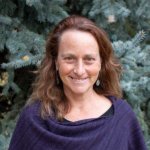 Director Julia Klein
Julia is a Professor of Sustainability Science and Mountain Studies at Colorado State University, traditional homelands of the Ute, Arapahoe, Cheyenne nations. Her career has focused on studying climate change impacts on mountain environments and people and identifying pathways to sustainable futures. She co-leads the Mountain Sentinels Alliance, which is comprised of Indigenous rights-holders, academics, community knowledge holders, educators, and students representing six continents and 50+ countries. She is on the Science Alliance for Protect Our Winters, the Research Board for Braiding Knowledges Canada, and the Advisory boards for the Center for Environmental Justice and the Center for Environmental Communication.
Paloma Iturriaga is a Peruvian producer. Her projects have received support from the Ministry of Culture of Peru and the Sundance Institute. She is a Sundance Institute alumna following her participation in the 2021 Producing Summit. In 2023, she was selected to take part in IDFA Forum with Runa Simi, directed by Augusto Zegarra. Runa Simi went on to premiere at the Tribeca Festival, where it received the Albert Maysles Award. The film continues its international trajectory, with selections including the Palm Springs International Film Festival (2026), where it received the Jury Award for Best Iberoamerican Film.
Claudia Chávez Lévano is a Peruvian filmmaker based in Madrid. She is one of the producers of Runa Simi, a documentary by Augusto Zegarra that received support from the Ministry of Culture of Peru, the Sundance Documentary Fund, and the StoryBoard Collective, and which premiered at the Tribeca Festival, winning the award for Best New Documentary Director. It also won the Young Jury Award at Sheffield DocFest. Her film projects have been selected at industry spaces such as the IDFA Forum, FICG, DocsBarcelona, ChileConecta, Dok Leipzig, Eurodoc, and the Sundance Institute’s Producer Summit Lab.
PROMOTE THIS PROJECT
Put a donation widget on your site. Click here for code.
ABOUT YOUR DONATION
Women Make Movies (WMM), Inc. is a 501(c)(3) non-profit media arts organization registered with the New York Charities Bureau of New York State and accepts charitable donations on behalf of this project. Your donation will be spent by the filmmaker(s) toward the production and completion of this media project. No services or goods are provided by Women Make Movies, the filmmaker(s) or anyone else associated with this project in exchange for your charitable donation.
Your contributions are tax deductible to the fullest extent of the law, and a confirmation of your donation will be sent via email. WMM will send you an acknowledgement letter in the mail to the address listed for tax purposes.
