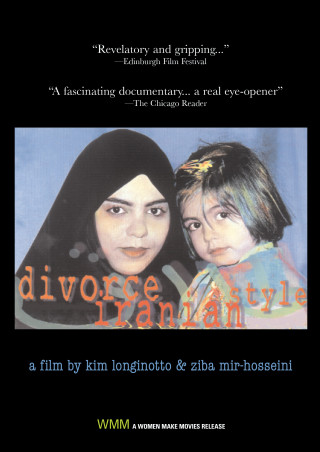
Divorce Iranian Style
England | 1998 | 80 minutes | Color | 16mm/DVD | Order No. 99619
SYNOPSIS
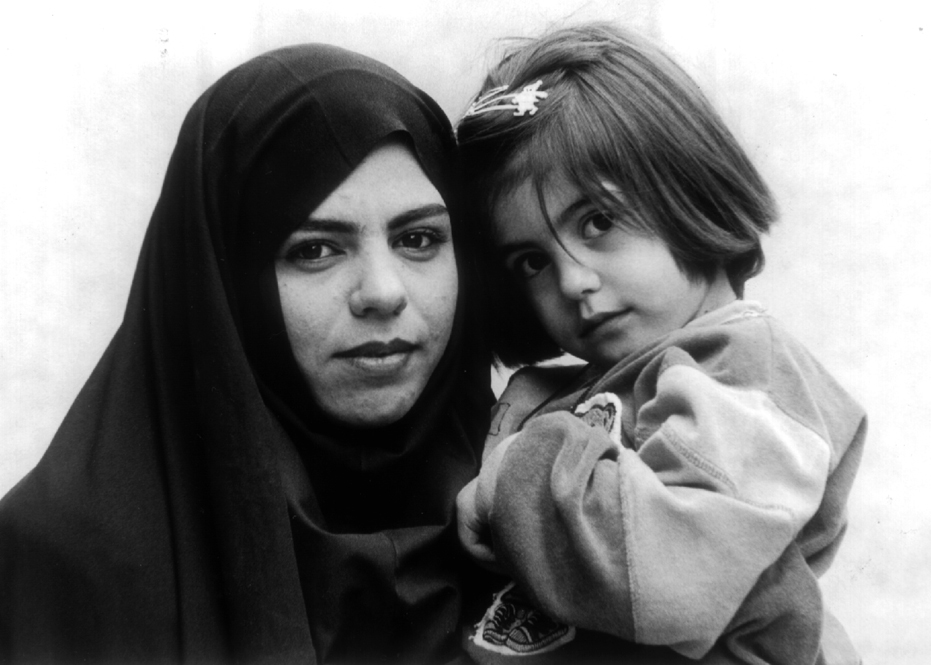
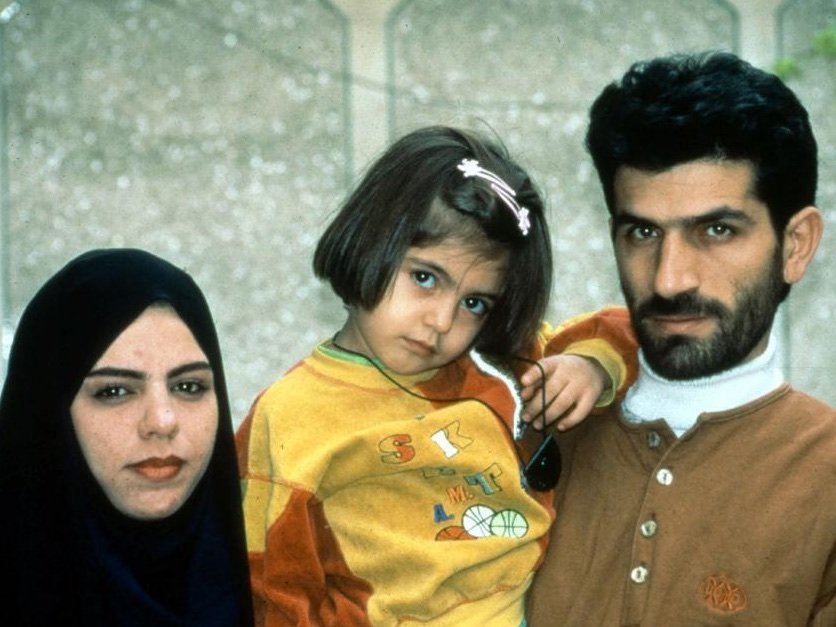
With the barest of commentary, acclaimed director Kim Longinotto turns her cameras on the court and lets it tell its own story. Dispelling images of Iran as a country of war, hostages, and “fatwas”, and Iranian women as passive victims of a terrible system, this film is a subtle, fascinating look at women’s lives in a country which is little known to most Americans. Directed by Kim Longinotto and Ziba Mir-Hosseini, author of MARRIAGE ON TRIAL: A STUDY OF ISLAMIC FAMILY LAW.
PRESS
“…could be effectively used in the classroom to challenge common stereotypes of Muslim women and to initiate conversation on the secular/religious distinction, the operations of state power and conceptions of choice and agency.”
“A fascinating verite-style documentary that counters with compassion, humor, and a keen nose for spotting empathetic characters, strong-willed women, and dramatic moments, the traditional stereotypes of women in the Muslim world as passive victims.”
SCREENING HIGHLIGHTS AND AWARDS
- BAFTA Awards, Flaherty Documentary Award for TV
- Biarritz Int'l Festival of Audiovisual Programming, Silver FIPA
- Chicago Int'l Film Festival, Silver Hugo Award for Best Documentary
- Yamagata Int'l Film Festival, FIPRESCI Award
- San Francisco Golden Gate Award, Grand Prize for Best Documentary
- Kalamata Int'l Film Festival, Greece, Best Feature Film Documentary
- Viewpoint Int'l Documentary Film Festival, Best Film
- Jerusalem Documentary Festival, Honorable Mention
- International Documentary Film Festival Amsterdam (IDFA)
- Vancouver Film Festival
- Edinburgh Film Festival
- Viennale International Film Festival
- Marseilles Film Festival
- Sheffield Documentary Film Festival
ABOUT FILMMAKER(S)
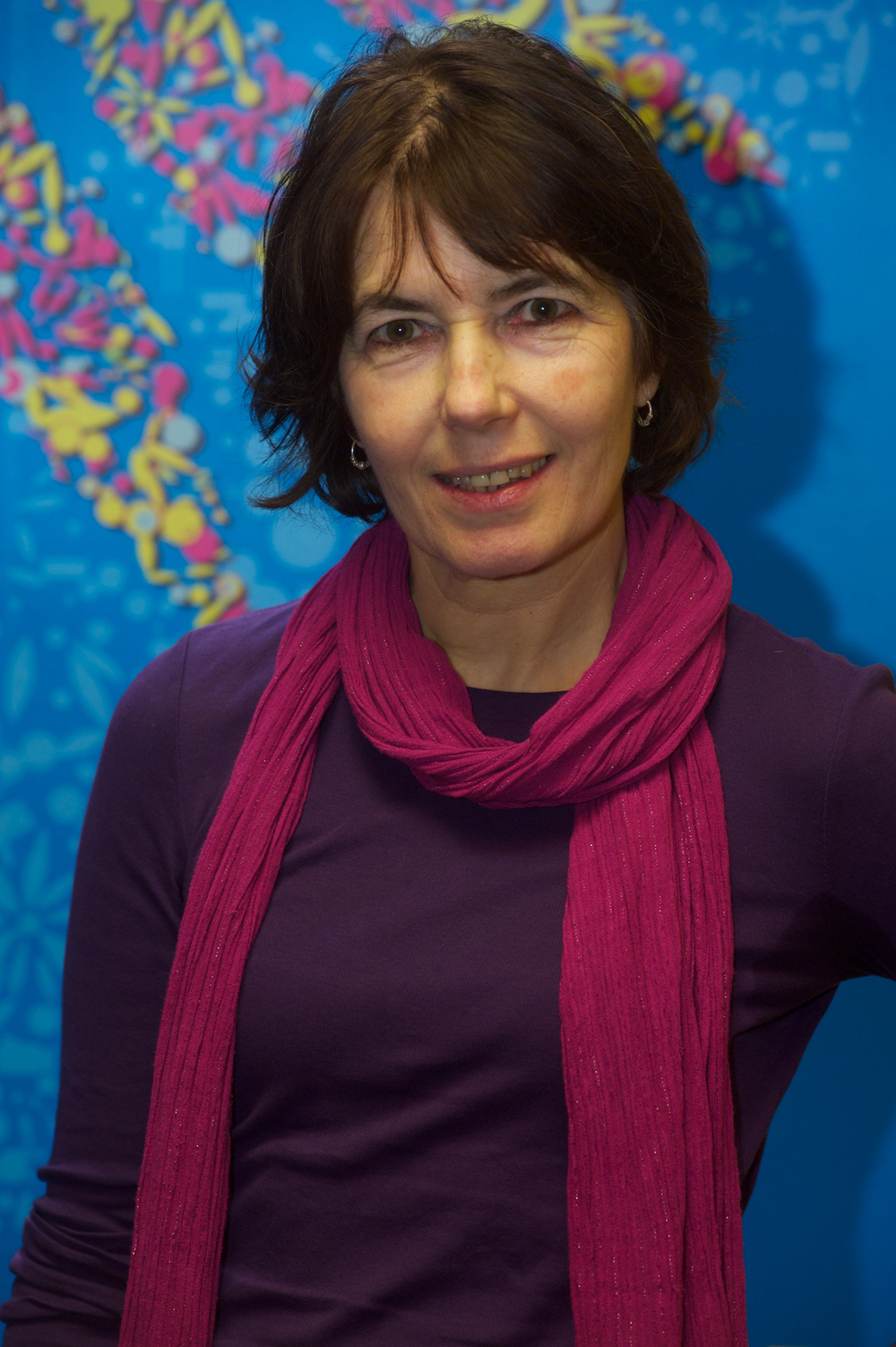
Kim Longinotto (born 1952) is a British documentary filmmaker, well known for making films that highlight female rebels and pioneers. Longinotto studied camera and directing at the National Film and Television School in Beaconsfield, England, where she now tutors occasionally.
Longinotto was born to an Italian father and a Welsh mother; her father was a photographer who later went bankrupt. At the age of 10 she was sent to a draconian all-girls boarding school, where she found it hard to make friends due to the mistress forbidding anyone to talk to her for a term after she became lost during a school trip. After a period of homelessness, Longinotto went on to Essex University to study English and European literature and later followed friend and future filmmaker, Nick Broomfield to the National Film and Television School. While studying, she made a documentary about her boarding school that was shown at the London Film Festival, since when she has continued to be a prolific documentary filmmaker.
Longinotto is an observational filmmaker. Observational cinema, also known as direct cinema, free cinema or cinema verite, usually excludes certain documentary techniques such as advanced planning, scripting, staging, narration, lighting, reenactment and interviewing. Longinotto’s unobtrusiveness, which is an important part of observational documentary, gives the women on camera a certain voice and presence that may not have emerged with another documentary genre. She has received a number of awards for her films over the years, including a BAFTA for her documentary PINK SARIS.
Among her more than 20 films, she has followed a teenager struggling to become a wrestling star in 2000’s GAEA GIRLS, challenged the tradition of female genital mutilation in Kenya in 2002’s THE DAY I WILL NEVER FORGET, and told the story of an Indian Muslim woman who smuggled poetry out to the world while locked up by her family in 2013’s SALMA. In 2015's DREAMCATCHER Longinotto looks at the life and work of a former sex worker who rescues Chicago girls from the street.
Her film SHOOTING THE MAFIA premiered at the 2019 Sundance Film Festival.
She received the 2026 Dragon of Dragons Award at the Kraków Film Festival alongside a major retrospective of her work.
(6/26)
Dr. Ziba Mir-Hosseini is a legal anthropologist, specializing in Islamic law, gender and development. She has a BA in Sociology from Tehran University (1974) and a PhD in Social Anthropology from University of Cambridge (1980). She is Professorial Research Associate at the Centre for Middle Eastern and Islamic Law, University of London. She has held numerous research fellowships and visiting professorships, including a Fellowship at the Wissenschaftskolleg zu Berlin (2004-5), and Hauser Global Law Visiting Professor at New York University (2002-8). Dr. Mir-Hosseini is a founding member of Musawah Global Movement for Equality and Justice in the Muslim Family.
Her publications include Marriage on Trial: A Study of Islamic Family Law in Iran and Morocco (I. B. Tauris, 1993, 2002), Islam and Gender: The Religious Debate in Contemporary Iran (Princeton University Press, 1999), (with Richard Tapper) Islam and Democracy in Iran: Eshkevari and the Quest for Reform (I. B. Tauris, 2006), and (with Vanja Hamzic) Control and Sexuality: the Revival of Zina Laws in Muslim Contexts (Women Living Under Muslim Laws, 2010). She has also directed (with Kim Longinotto) two award-winning feature-length documentary films on contemporary issues in Iran: DIVORCE IRANIAN STYLE (1998) and RUNAWAY (2001). (8/14)
Subject Areas
RELATED LINKS
MATERIALS