Array
(
[id] => 400
[title] => Tillie Olsen: A Heart in Action
[link] => stdClass Object
(
[url] => https://www.wmm.com/catalog/film/tillie-olsen-a-heart-in-action
[title] => more
)
[image_thumb] => https://www.wmm.com/storage/films/tillie-olsen-a-heart-in-action/320x-cbe_tillie.png
[created_at] => Array
(
)
[year_released] => 2007
[text] => This revelatory documentary is an inspiring homage to Tillie Lerner Olsen – a renegade, revolutionary, distinguished fiction and non-fiction writer, feminist, humanist, labor organizer and social activist. Politically active, class conscious, deeply joined to the world, Tillie countered the very core of American writing by immortalizing the lives of working class women and single mothers. Her short stories “Tell Me a Riddle,” and “I Stand Here Ironing,” galvanized the literary world and set in motion an essential new perspective on the lives of ordinary women.
Filmmaker Ann Hershey tells not only the story of Olsen as a writer, but also documents her life as an activist. Extended interviews with Olsen during the last years of her life are deftly interspersed with footage from her readings, lectures and book signings as well as with archive materials and comments from notable feminists such as Gloria Steinem and Alice Walker. A perfect companion film in courses covering Olsen’s literature, this documentary is also recommended for women’s studies, labor studies, political studies and American history courses.
[image] => https://www.wmm.com/storage/films/tillie-olsen-a-heart-in-action/cbe_tillie.jpg
)
Tillie Olsen: A Heart in Action
This revelatory documentary is an inspiring homage to Tillie Lerner Olsen – a renegade, revolutionary, distinguished fiction and non-fiction writer, feminist, humanist, labor organizer and social activist. Politically active, class conscious, deeply joined to the world, Tillie countered the very core of American writing by immortalizing the lives of working class women and single mothers. Her short stories “Tell Me a Riddle,” and “I Stand Here Ironing,” galvanized the literary world and set in motion an essential new perspective on the lives of ordinary women.
Filmmaker Ann Hershey tells not only the story of Olsen as a writer, but also documents her life as an activist. Extended interviews with Olsen during the last years of her life are deftly interspersed with footage from her readings, lectures and book signings as well as with archive materials and comments from notable feminists such as Gloria Steinem and Alice Walker. A perfect companion film in courses covering Olsen’s literature, this documentary is also recommended for women’s studies, labor studies, political studies and American history courses.
Learn more
Array
(
[id] => 414
[title] => Who's Afraid of Kathy Acker?
[link] => stdClass Object
(
[url] => https://www.wmm.com/catalog/film/whos-afraid-of-kathy-acker
[title] => more
)
[image_thumb] => https://www.wmm.com/storage/films/whos-afraid-of-kathy-acker/320x-ackertypewriter_hires.png
[created_at] => Array
(
)
[year_released] => 2008
[text] => A multi-layered work featuring animation, archival footage and interviews with the likes of William Burroughs, Carolee Schneemann and Richard Hell, Who’s Afraid of Kathy Acker by Austrian artist Barbara Caspar and co-produced by Annette Pisacane (Nico Icon) and Markus Fischer, is a thoughtful and creative film biography/essay on the late outlaw writer and punk icon, whose formally inventive novels, published from the ’70s through the mid-’90s, challenged assumptions about gender roles, sexuality, and the literary canon.
A beguiling and intensely contradictory figure, Acker is best known for books which creatively appropriated texts from Great White Male writers, retelling them in an emotionally raw, sexually blunt, and politically questioning female voice. With her conceptual art videos in the ’70s, her close-cropped dyed blond hair, her tattoos, and her piercings, Acker was a performance artist, proto riot grrl, and living link to the transgressive authors of the ’50s and ’60s US and French experimental fiction scenes. Caspar has made a film that captures the essence of both Acker the writer and Acker the person while celebrating the avant-garde legacy of an artist who forever expanded the limits of self-expression. — Scott Macaulay, Filmmaker Magazine
[image] => https://www.wmm.com/storage/films/whos-afraid-of-kathy-acker/ackertypewriter_hires.jpg
)
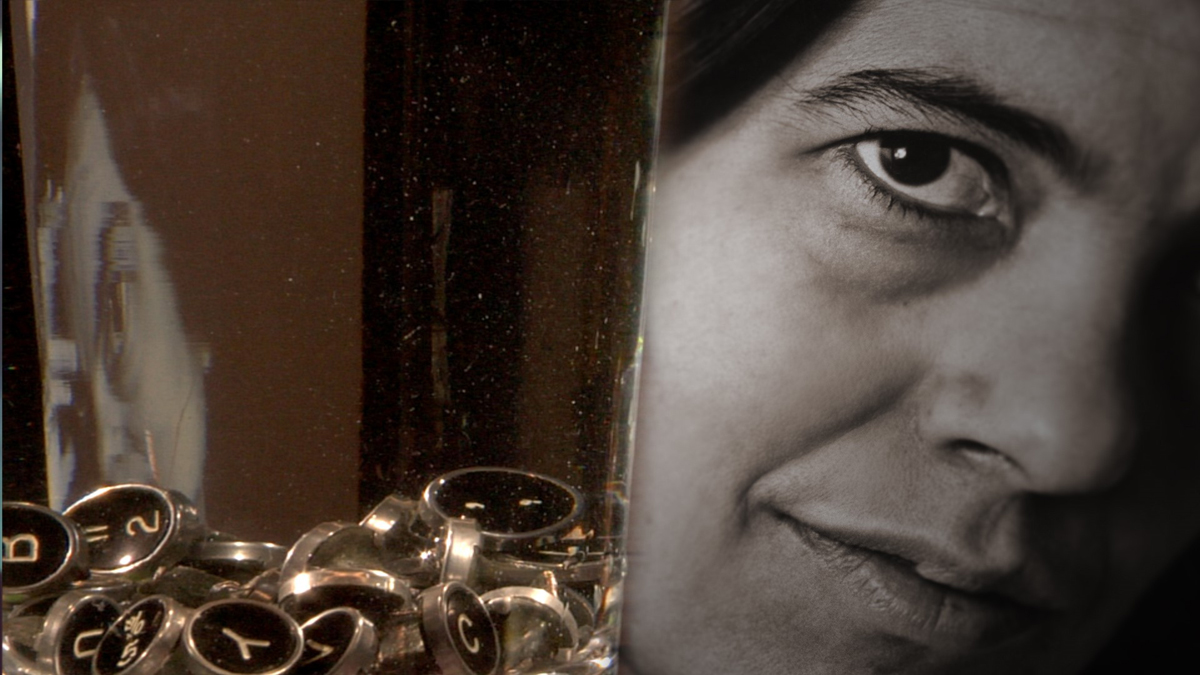
Who's Afraid of Kathy Acker?
A multi-layered work featuring animation, archival footage and interviews with the likes of William Burroughs, Carolee Schneemann and Richard Hell, Who’s Afraid of Kathy Acker by Austrian artist Barbara Caspar and co-produced by Annette Pisacane (Nico Icon) and Markus Fischer, is a thoughtful and creative film biography/essay on the late outlaw writer and punk icon, whose formally inventive novels, published from the ’70s through the mid-’90s, challenged assumptions about gender roles, sexuality, and the literary canon.
A beguiling and intensely contradictory figure, Acker is best known for books which creatively appropriated texts from Great White Male writers, retelling them in an emotionally raw, sexually blunt, and politically questioning female voice. With her conceptual art videos in the ’70s, her close-cropped dyed blond hair, her tattoos, and her piercings, Acker was a performance artist, proto riot grrl, and living link to the transgressive authors of the ’50s and ’60s US and French experimental fiction scenes. Caspar has made a film that captures the essence of both Acker the writer and Acker the person while celebrating the avant-garde legacy of an artist who forever expanded the limits of self-expression. — Scott Macaulay, Filmmaker Magazine
Learn more
Array
(
[id] => 430
[title] => Sweatshop Cinderella: A Portrait of Anzia Yezierska
[link] => stdClass Object
(
[url] => https://www.wmm.com/catalog/film/sweatshop-cinderella-a-portrait-of-anzia-yezierska
[title] => more
)
[image_thumb] => https://www.wmm.com/storage/films/sweatshop-cinderella-a-portrait-of-anzia-yezierska/320x-cbi_sweatshop_hires2.png
[created_at] => Array
(
)
[year_released] => 2010
[text] => In the forefront of early twentieth-century American literature about immigrant women’s lives, Anzia Yezierska’s work includes short fiction, novels, and essays, and her output spans 50 years. SWEATSHOP CINDERELLA, by award-winning filmmaker/historian Suzanne Wasserman, vividly depicts this Jewish immigrant writer’s amazing story.
Arriving from Poland around 1890, Yezierska’s family settled on the Lower East Side, where she toiled in sweatshops and laundries, studying English at night. Defying her parents, she pursued her education and became a teacher. Twice married and divorced, she also had a daughter. At the urging of philosopher John Dewey, with whom she fell in and out of love, Yezierska devoted herself full-time to writing stories and novels in Yiddish-English dialect that won awards and rave reviews. Soon Hollywood, which turned two of her works into movies, beckoned her to write screenplays. When disenchantment with that world set in, she returned to New York, writing and publishing her best work between 1922 and 1950.
Using archival stills and footage, silent film excerpts, letters, newspaper clippings, and interviews, this is a major contribution to our understanding and appreciation of Yezierska and her work.
[image] => https://www.wmm.com/storage/films/sweatshop-cinderella-a-portrait-of-anzia-yezierska/cbi_sweatshop_hires2.jpg
)
Sweatshop Cinderella: A Portrait of Anzia Yezierska
In the forefront of early twentieth-century American literature about immigrant women’s lives, Anzia Yezierska’s work includes short fiction, novels, and essays, and her output spans 50 years. SWEATSHOP CINDERELLA, by award-winning filmmaker/historian Suzanne Wasserman, vividly depicts this Jewish immigrant writer’s amazing story.
Arriving from Poland around 1890, Yezierska’s family settled on the Lower East Side, where she toiled in sweatshops and laundries, studying English at night. Defying her parents, she pursued her education and became a teacher. Twice married and divorced, she also had a daughter. At the urging of philosopher John Dewey, with whom she fell in and out of love, Yezierska devoted herself full-time to writing stories and novels in Yiddish-English dialect that won awards and rave reviews. Soon Hollywood, which turned two of her works into movies, beckoned her to write screenplays. When disenchantment with that world set in, she returned to New York, writing and publishing her best work between 1922 and 1950.
Using archival stills and footage, silent film excerpts, letters, newspaper clippings, and interviews, this is a major contribution to our understanding and appreciation of Yezierska and her work.
Learn more
Array
(
[id] => 476
[title] => The Poetry Deal: A Film with Diane di Prima
[link] => stdClass Object
(
[url] => https://www.wmm.com/catalog/film/the-poetry-deal-a-film-with-diane-di-prima
[title] => more
)
[image_thumb] => https://www.wmm.com/storage/films/the-poetry-deal-a-film-with-diane-di-prima/320x-cbi_poetdeal_hires2.png
[created_at] => Array
(
)
[year_released] => 2011
[text] => She remains the most famous woman poet of the Beat Generation; her friend Allen Ginsberg called her “heroic in life and poetics.” THE POETRY DEAL is an impressionistic documentary about legendary poet Diane di Prima. Still actively writing in her late 70s in San Francisco, where she is poet laureate, di Prima is fierce, funny and philosophical. She is a pioneer who broke boundaries of class and gender to publish her writing, and THE POETRY DEAL opens a window looking back through more than 50 years of poetry, activism, and cultural change, providing a unique women’s perspective of the Beat movement. Much of the story is told through di Prima’s recorded readings, including a deeply moving reading of her unpublished poem The Poetry Deal, reflecting on her relationship with her art. Essential for women’s studies, poetry studies, women’s history courses and more, THE POETRY DEAL puts di Prima’s life and work on screen in a unique, beautiful portrait using rare archival footage, impressionistic scenes and powerful stories told by friends and colleagues.
[image] => https://www.wmm.com/storage/films/the-poetry-deal-a-film-with-diane-di-prima/cbi_poetdeal_hires2.jpg
)
The Poetry Deal: A Film with Diane di Prima
She remains the most famous woman poet of the Beat Generation; her friend Allen Ginsberg called her “heroic in life and poetics.” THE POETRY DEAL is an impressionistic documentary about legendary poet Diane di Prima. Still actively writing in her late 70s in San Francisco, where she is poet laureate, di Prima is fierce, funny and philosophical. She is a pioneer who broke boundaries of class and gender to publish her writing, and THE POETRY DEAL opens a window looking back through more than 50 years of poetry, activism, and cultural change, providing a unique women’s perspective of the Beat movement. Much of the story is told through di Prima’s recorded readings, including a deeply moving reading of her unpublished poem The Poetry Deal, reflecting on her relationship with her art. Essential for women’s studies, poetry studies, women’s history courses and more, THE POETRY DEAL puts di Prima’s life and work on screen in a unique, beautiful portrait using rare archival footage, impressionistic scenes and powerful stories told by friends and colleagues.
Learn more
Array
(
[id] => 511
[title] => Esther Broner: A Weave of Women
[link] => stdClass Object
(
[url] => https://www.wmm.com/catalog/film/esther-broner-a-weave-of-women
[title] => more
)
[image_thumb] => https://www.wmm.com/storage/films/esther-broner-a-weave-of-women/320x-cbe_estherb.png
[created_at] => Array
(
)
[year_released] => 2013
[text] => Prolific writer, passionate activist, dedicated scholar and pioneering feminist, Esther Broner infused second wave feminism with a distinctive Jewish voice. In the mid-1970s, as the women’s movement was vastly changing views on gender and equality, Broner created a radical new Haggadah (the text for the Passover service seder) that preserved but reimagined Jewish rituals and culture by shifting the focus onto women. Transforming the male-centered service into a powerful reclamation of women’s lives and stories, it became, under Broner’s leadership, the basis for a Jewish feminist tradition that continues today.
This inspiring documentary by acclaimed filmmaker Lilly Rivlin revisits Broner’s richly engaged political, artistic and spiritual life through archival photos, video footage spanning several decades, and interviews with family and friends, including Gloria Steinem, Bella Abzug, Grace Paley, and other famous feminists. Drawing its title from one of Broner’s celebrated novels, the film helps explore the intersection of feminism and religion, and helps answer the question, is there room for feminism and religious tradition in a traditionally male dominated space?
[image] => https://www.wmm.com/storage/films/esther-broner-a-weave-of-women/cbe_estherb.jpg
)
Esther Broner: A Weave of Women
Prolific writer, passionate activist, dedicated scholar and pioneering feminist, Esther Broner infused second wave feminism with a distinctive Jewish voice. In the mid-1970s, as the women’s movement was vastly changing views on gender and equality, Broner created a radical new Haggadah (the text for the Passover service seder) that preserved but reimagined Jewish rituals and culture by shifting the focus onto women. Transforming the male-centered service into a powerful reclamation of women’s lives and stories, it became, under Broner’s leadership, the basis for a Jewish feminist tradition that continues today.
This inspiring documentary by acclaimed filmmaker Lilly Rivlin revisits Broner’s richly engaged political, artistic and spiritual life through archival photos, video footage spanning several decades, and interviews with family and friends, including Gloria Steinem, Bella Abzug, Grace Paley, and other famous feminists. Drawing its title from one of Broner’s celebrated novels, the film helps explore the intersection of feminism and religion, and helps answer the question, is there room for feminism and religious tradition in a traditionally male dominated space?
Learn more
Array
(
[id] => 530
[title] => Suzy Lake: Playing with Time
[link] => stdClass Object
(
[url] => https://www.wmm.com/catalog/film/suzy-lake-playing-with-time
[title] => more
)
[image_thumb] => https://www.wmm.com/storage/films/suzy-lake-playing-with-time/320x-suzlak_hires1.png
[created_at] => Array
(
)
[year_released] => 2014
[text] => Photographer Suzy Lake is one of the formative feminist artists to evolve out of the heyday of the 1960’s and the Second Wave. A master of the art of self-portraiture, Lake influenced Cindy Sherman as well as a host of other female artists. Lake makes art that address politics, gender, youth, beauty and aging while reflecting on her own journey through time. SUZY LAKE: PLAYING WITH TIME tells the story of how much has changed in the worlds of feminism and art, and yet how much things remain the same.
Filming for almost 4 years, filmmaker Annette Mangaard weaves a powerful portrait of the complex artist by juxtaposing powerful archival footage, still photography and interviews with Lucy Lippard, Mary Beth Edelson and Martha Wilson among others. SUZY LAKE: PLAYING WITH TIME delves into Lake’s legacy as she continues to explore the politics of gender with work that deals with the aging woman, countering notions of consumer beauty with a different and real image, celebrating stamina, maturity and experience. An essential companion piece to any discussion on the Second Wave, feminism and art.
[image] => https://www.wmm.com/storage/films/suzy-lake-playing-with-time/suzlak_hires1.jpg
)
Suzy Lake: Playing with Time
Photographer Suzy Lake is one of the formative feminist artists to evolve out of the heyday of the 1960’s and the Second Wave. A master of the art of self-portraiture, Lake influenced Cindy Sherman as well as a host of other female artists. Lake makes art that address politics, gender, youth, beauty and aging while reflecting on her own journey through time. SUZY LAKE: PLAYING WITH TIME tells the story of how much has changed in the worlds of feminism and art, and yet how much things remain the same.
Filming for almost 4 years, filmmaker Annette Mangaard weaves a powerful portrait of the complex artist by juxtaposing powerful archival footage, still photography and interviews with Lucy Lippard, Mary Beth Edelson and Martha Wilson among others. SUZY LAKE: PLAYING WITH TIME delves into Lake’s legacy as she continues to explore the politics of gender with work that deals with the aging woman, countering notions of consumer beauty with a different and real image, celebrating stamina, maturity and experience. An essential companion piece to any discussion on the Second Wave, feminism and art.
Learn more